You can spend a whole weekend rearranging a room and still feel that something is missing. The sofa is in the right place, the rug works, the art is hung — and yet the space looks like a showroom photograph taken with the flash on. Almost every time, the culprit isn't the furniture. It's the light. Flat rooms are not the result of bad taste; they're the result of a handful of small, extremely common decisions that are easy to make and just as easy to undo. Here are the seven we come across most often, with fixes you can try this evening using lamps you probably already own.
1. One Ceiling Light Doing All the Work
A single fixture in the middle of the ceiling is the most common lighting decision in Europe and the least forgiving. It pours light straight down, throws shadows under shelves and eye sockets, and leaves the upper corners of the room dark. Everything in the space receives roughly the same amount of light, from the same direction, at the same colour — and sameness is exactly what flatness is.
Depth is built from gradients: a bright pool of light beside a softer one, a lit wall next to a shadowed corner. One fixture cannot create that. Think in three jobs instead: ambient light for general visibility, task light where you read, cook or work, and accent light for pictures, plants and the texture of a wall. A living room with the ceiling light switched off and three well-placed lamps on will feel larger and more inviting than the same room flooded from above.
2. Cool White Bulbs in Rooms Where You Sit
Colour temperature quietly changes how a room feels. Bulbs around 2700K to 3000K give a warm, slightly golden light that flatters wood, wool, linen and skin. Anything at 4000K and above reads cool and clinical — perfectly good for a garage, a utility room or a workbench, but harsh over a dining table at nine in the evening.
There is a second problem: mixing temperatures in one room. Install a 2700K bulb in the floor lamp and a 4000K bulb in the ceiling and the space looks inconsistent in a way most people sense but can't name. Your eye registers the mismatch as unease.
The fix
- Read the box before you buy, not after. Look for the kelvin figure, not just "warm white".
- Choose 2700K for living rooms, bedrooms and dining areas; 3000K if you prefer something crisper in a kitchen.
- Keep one temperature per room, and buy a spare bulb of the same type so a replacement doesn't break the pattern.
3. Light That Only Comes From Above
Ceiling fixtures, downlights and pendants all sit high up, which means the middle of the room — the part at your own height — is lit only by bounce. Walls go dark, faces pick up shadows, and the room reads as a box with a bright lid.
Look at any interior photograph that feels warm and lived-in and you'll usually find light at several heights: a table lamp, a wall sconce, a candle, a floor lamp. Bringing a source down to eye level is one of the fastest changes you can make. A wall sconce mounted around 1.5 to 1.8 metres, a lamp on a sideboard, a floor lamp angled into a corner — any of these will do more for the atmosphere of a room than a bigger ceiling light ever will.
4. No Dimming and No Separate Control
If your lights are either fully on or fully off, the room can only have two moods. Real rooms need to move through the day: bright for cleaning and homework, softer for dinner, low for the last hour before bed. Dimming does that in a single gesture — and with warm bulbs it also deepens the colour of the light as it drops, which is why a dimmed room feels intimate rather than merely dark.
Lighting a room is less about how much light you add and more about how much you can take away.
Two practical points. First, check that your bulbs are marked as dimmable before fitting a dimmer — standard LEDs can flicker, buzz or fail early on a dimmed circuit. Second, stop putting every lamp on one switch. Splitting the ceiling light, the lamps and the accent lighting onto separate switches lets you choose a combination instead of accepting all of it.
5. Ignoring the Walls and the Ceiling
Walls are the largest surfaces in any room, and in most homes they receive almost no direct light. When the only illumination comes from recessed fittings aimed at the floor, the walls turn into dark planes and the room closes in.
Washing a wall with light makes a space feel wider; grazing it with a sconce or a small uplighter reveals texture in plaster, brick or paint and adds a layer the eye reads as depth. Uplighting a ceiling, even gently, lifts the perceived height of a room with low ceilings.
Easy ways to try it
- Place a floor uplighter behind a plant or a chair so the light climbs the wall rather than hitting you in the face.
- Move a table lamp closer to the wall — roughly 20 to 30 centimetres out — so it creates a soft wash instead of a bright spot in the middle of the room.
- Angle a picture light or a small spotlight across a wall rather than straight at the object on it.
6. Glare From Bare Bulbs and Rows of Downlights
Glare is light hitting your eye directly instead of bouncing off a surface first. A bare bulb at eye level, a spotlight aimed across a sofa, a grid of ceiling downlights visible from the doorway — all of them force your eye to adapt to the brightest thing in the room. Everything else then looks dim by comparison, and the room appears flatter than it actually is.
The fix is usually positioning rather than shopping. Fit shades that shield the bulb from seated eye level. Choose deeper recessed trims over flush ones. Keep spotlights away from the sightline between a chair and the television, and aim them at walls and objects rather than into the room. And dim: glare is far more objectionable at full output than at seventy percent.
7. Lighting Everything to the Same Brightness
Over-lighting is the quiet mistake. A room with six lamps all blazing at full power has no hierarchy, and without hierarchy there is no shape. If a dining table and the wall behind it are equally bright, the table loses its edges and the wall loses its character.
Try the opposite approach for one evening: switch on the two lamps that matter most, leave the rest off, and see how much more the room appears to have. Shadows are not a failure of lighting; they are what gives light something to describe.
A Simple Way to Start
You don't need to rewire anything. Tonight, turn off the ceiling light in the room you use most and switch on two lamps at different heights — one at table level, one lower or higher. Tomorrow, replace any cool white bulbs in that room with 2700K ones and note the difference in how the wood and fabric look. Over the next few weeks, add a dimmer to the main circuit, put one source at eye level in every room, and resist the urge to fill every corner with light.
Good lighting is mostly a matter of contrast, warmth and layers. Get those three roughly right and even a modest room will start to feel like it has depth — which, in the end, is what people mean when they say a space feels comfortable.
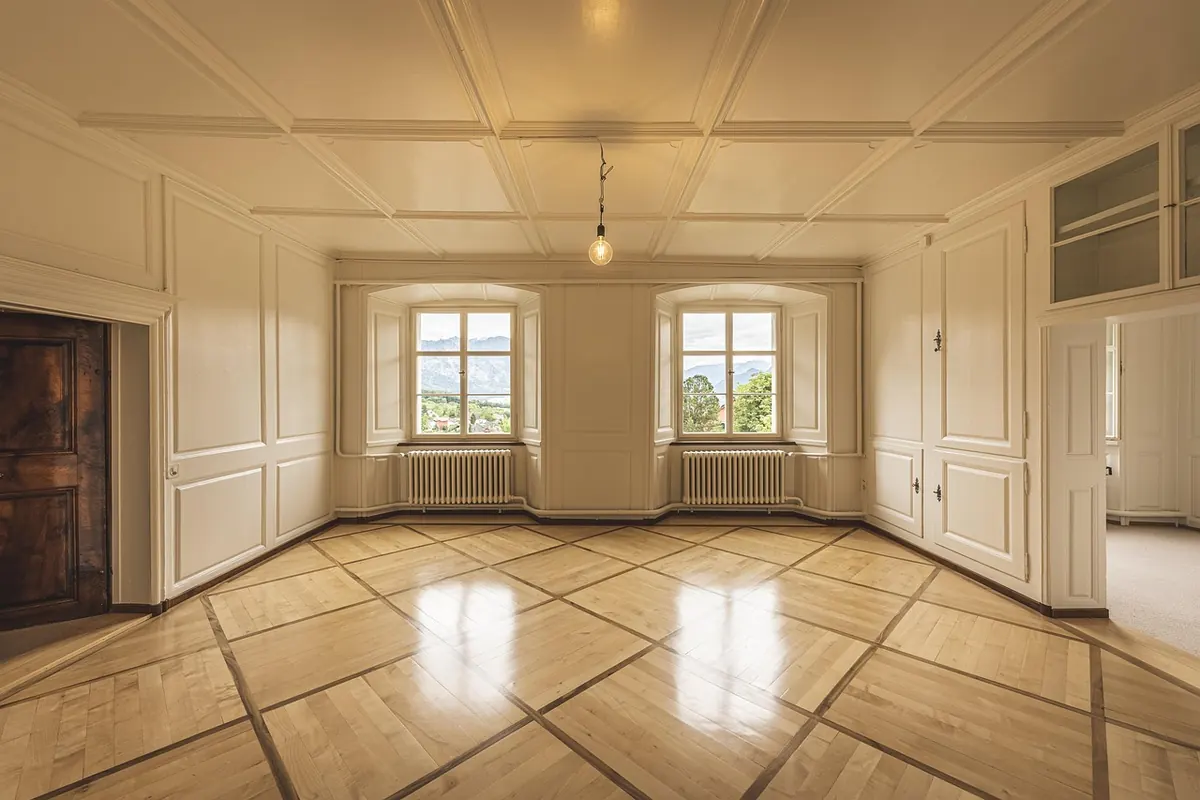
Photo: RandyJost / Pixabay